The Long Walk, Mile 22, And A Friendship You Only Get For A Few Days
July 19, 20269 min read1,922 words
The best friendships of your life ended, and that's not the problem. The Long Walk is a movie about kids dying on a road. It's also the most honest thing I've seen about how real friendship actually works
The takeaways
- 01
Every friendship ends; that's not a failure of the friendship, that's time doing what time does.
What to do nextName the one place in your life this week where friendship is quietly running the show, and write it down before you go to bed tonight.
- 02
Treat the season you get with someone as the thing itself, not as a rehearsal for a longer version that may never show up.
- 03
Bitterness that it ended is a way of pretending it didn't happen; gratitude is how you let it keep counting.
What to do nextName the one place in your life this week where bitterness is quietly running the show, and write it down before you go to bed tonight.
- 04
Chasing the exact feeling you had once has diminishing returns; receiving what is here with gratitude does not.
- 05
At mile 22 of anything hard, the person shuffling next to you is not your competition; they're the reason you finish.
What to do nextPick one conversation you have been putting off where mile is the real subject, and have it before the week ends.
- 06
This moment matters, especially when you know it doesn't last; that is the whole point of The In-Between.
I read the book in high school when it was still Richard Bachman on the cover, 1979. Bachman was Stephen King writing under a pen name, and I didn't find out until 1985 like the rest of the world. I watched the 2025 film last night at 55, and it sat on my chest for reasons that had almost nothing to do with the walking. In case you haven't read it or seen it: 50 boys start walking, one from each state, no stopping, three warnings and you're shot on the road. Last one walking wins.
That's the plot I can give you in a sentence. It's not what I came away with.
Mile 22
I've finished 24 Ironmans. In almost every one, somewhere between mile 18 and mile 22 of the marathon, the same thing happens. The body has been past empty for a while. The pace has dropped to a walk-jog. The next aid station looks farther away than the finish line, even though it isn't.
In that state, my brain goes to The Long Walk. Not consciously. Just the feeling. One more step. Then one more. Don't stop. If you stop, you don't start again. The Major isn't going to shoot me, but the medical tent is a real thing, and quitting is a real thing, and the difference between finishing and not finishing is almost never fitness at mile 22. It's whether you can keep taking one more step while your body files a formal complaint.
King, writing as Bachman, wrote the best late-race Ironman training aid I've ever encountered, and he did it before I ever ran a step of one.
What The Movie Added
The walking wasn't what got me. It was Ray and Pete.
Two kids on a road where 49 out of 50 of them will be dead by morning. Every reason to treat each other as competition. Instead they choose each other. They walk together. They keep each other upright. A joke, a look, a hand on the shoulder that means don't sit down.
Late in the film there's a beat I keep replaying. Pete looks over at Ray in the rain and says, more or less: this, right here, is the thing. Not the finish, not the prize, not tomorrow. This stretch of road, with you, right now. It's the closest thing to a thesis I heard in the whole movie, and he says it while they're both, technically, dying.
They're carrying two different north stars down the same road.
Pete: this moment matters. Right here, on this stretch of asphalt, with this person, in this light. This counts.
Ray: it won't last, so don't get attached.
Same road. Same pace. Two completely different experiences of being alive on it. Mile after mile, I watched the film quietly land on Pete's side, and by the end I was on it too.
Why This Landed On Me
I wrote a book called The In-Between: Life in the Micro. It opens with a chain-reaction accident on May 9, 2022.
Melissa and I were driving home on I-70 in Missouri when the semi next to us blew a tire. Pieces of it hit our passenger window and the side of the van. We kept driving. A truck ahead of us dropped buckets of chemicals onto the freeway and we bounced through them until they rolled clear. We crossed the Mississippi, where I-70 becomes I-64 in Illinois, and took the exit for a restaurant near home, found it closed, and pulled back out toward the intersection. That's when a blue car ran the red and T-boned a black truck right in front of us. We got out. The woman who'd been driving the blue car was already staggering into the middle of the intersection, one shoe missing, glass falling off her, arm bent the wrong way. Melissa, a nurse, ran and caught her before she fainted. I checked on the man in the truck, who was shaken but okay. A woman who'd pulled up behind us asked how she could help; I asked her to call 911. Then I went back. The driver of the blue car kept repeating, "Call my husband, call my husband," and shouted out his number. I called him from my phone while Melissa eased her down onto the pavement, then handed the phone to her so she could hear his voice. That was the only thing she wanted.
There's a line I wrote later, in the prologue: Sometimes I'm so focused on the macro-goal that I lose sight of what others need in the micro-moments, which I believe is to feel understood, appreciated, and not alone, particularly when in crisis.
A few pages later I wrote this: The in-between is where life actually happens. The macro moments are the punctuation. The micro is the sentence.
That intersection is the whole book. Everything I'd been optimizing for that afternoon went pixelated. The only thing in focus was the person on the asphalt. That's Pete's line, said in a different medium. Ray's stance, don't get attached, it won't last, is the same defense I lived in for most of my adult life before that intersection. It looks like realism. It's actually avoidance. It lets you skip what's in front of you because you've already decided it won't count.
(A note for readers of the book: I called her Vanessa in The In-Between. She's Melissa, now my wife. Same person, same instincts.)
The People I Met On A Mountain And Never Spoke To Again
Some of my best memories are with people I met on an adventure and then never spoke to again.
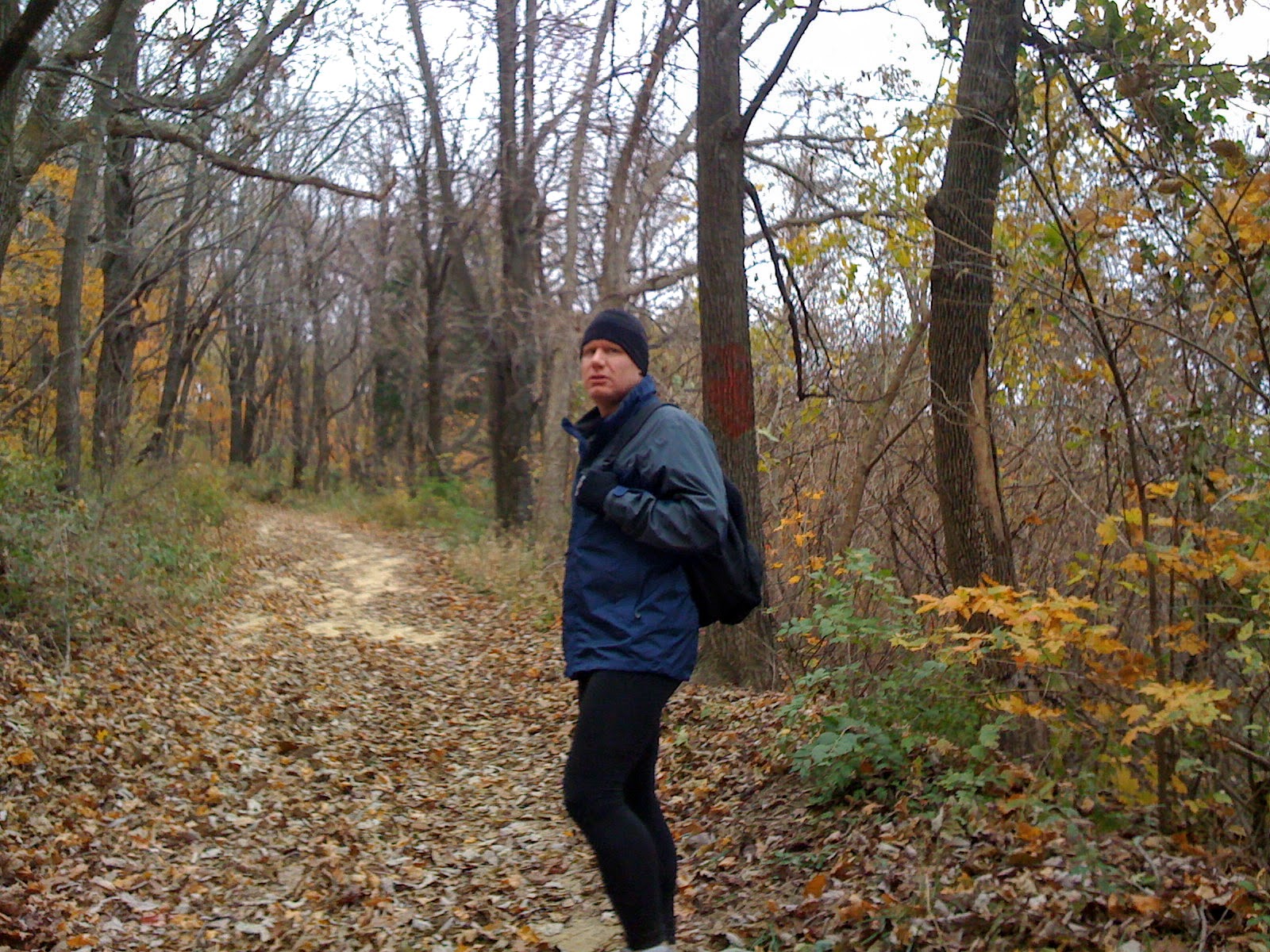
A guy from Poland on Elbrus who split his last Snickers with me somewhere above 17,000 feet, in wind that made talking pointless. I knew his name up there. We just never stayed in touch after the mountain. A teammate I traded gels and Clif Bars with in the middle of the night on an adventure race, both of us too tired to say much. A four-person adventure race team thrown together the morning of the event; eight hours in the hottest part of an Illinois summer and we knew each other's fears, tempers, and breaking points better than most of our coworkers ever will. A stranger on a random trailhead who ended up walking 11 miles with me because we were both moving at the same pace and the conversation was better than the silence. The rope team in the photo above on the Elbrus summit at dawn. I knew every one of them by name up there. Life moved on and I couldn't tell you where most of them live now.
For a long time I thought that was a failure on my part. That a real friendship means you keep it. That if I let it end at the trailhead or the finish line, I wasn't a good enough friend to hold on to it. I carried that quietly for years.
And if I'm being honest about why: lifelong friendships are the ones I'm worst at. For most of my adult life the mission was the relationship. Company, book, race, next thing. People who showed up on the road with me got all of me for the duration and almost none of me between chapters. The two-day kind, on a mountain or a course, I can do in my sleep. The 20-year kind takes a muscle I've spent most of my life not training. So part of why the road versions land so hard for me is that they're the ones I actually know how to be in. For a long stretch I treated that as a defect. Eventually I stopped.
Part of what let me stop was watching two kids on a road choose each other on purpose. Pete and Ray get, at best, a few days, and they build something real anyway. The kind where you'd take a bullet for the other person and not have to think about it. Most people would call that a tragedy. I think it's one of the healthiest models of friendship I've seen on a screen in a long time. The friendship was real while it was happening. Its ending does not cancel the thing itself.
Some friendships are shaped exactly like the thing you did together. They were built for the mountain, or the course, or the ridge, or the race. Trying to drag them off the mountain and turn them into a text thread and a birthday reminder is often what kills them. They were complete on the road. That is what they were for.
It is okay to love someone for two days and never see them again. That is not a lesser friendship. That is a friendship that knew what it was.
The Diminishing Returns Of Chasing The Feeling
The pursuit of more of a feeling almost always has diminishing returns.
More of that summit high. More of that finish-line rush. More of that early-relationship elation. More of that specific version of joy you felt one time on one trip with one person in one light. The second time is quieter. The third is quieter still. By the fifth you're chasing a ghost of the first one and wondering why it isn't landing.
It isn't landing because the moment you shift from receiving what is here to chasing what was, you've already left. Chasing is a posture that assumes the current moment is insufficient. The current moment picks up on that. So do the people in it.
The first Ironman I ever finished felt like getting struck by lightning. The 24th felt like coming home. Both were good, in completely different ways. If I'd spent the next 23 trying to reproduce what mile 26 of number one felt like, I would have been miserable at every finish line since.
Gratitude is not a mood. It is a stance. It is the choice to treat what is here as the whole thing, not as a diluted version of something better you had once. The macro trap has two shapes. One is chasing something bigger later. The other is chasing something better you had before. Both cost you the same thing.
Mile 26
At an Ironman finish I don't remember much else about, a woman stood in the chute ringing a cowbell emphatically, like I was the person she'd been waiting for. She had no idea who I was, and she was marking my arrival anyway. It took me years to understand what she was actually giving me.
The last time I finished, I rang the bell myself. That's the tradition at Broken Arrow. You reach up, grab the rope, and mark your own arrival.
Pete got it on the road. Melissa and I got it at an intersection in Illinois. A stranger got it for me at an Ironman. I got it for myself at an ultra.
That was enough.
“You get to have a great friendship for a few days. It was real when it was real. That counts.”
Frequently asked
Keep reading
-
Too Old Is a Decision, Not an Age
Same idea from the other side: the reason people stop showing up for the moment is that they've already decided the moment doesn't count anymore.
Read essay → -
I Am Statements: How Identity Language Rewires Behavior
Pete chose an identity for the road he was on. Ray chose a different one. You get to choose which one you walk with.
Read essay → -
The Circumstance Will Lie To You
Mile 22 of an Ironman is the same conversation Ray and Pete are having on the road: the body says stop, the vision says one more step.
Read essay →