Essay
How to Prepare for a Podcast Interview
November 1, 20265 min read1,116 words
In my Greenlight Guru interview, patient safety and secure boot gave a technical conversation concrete stakes. Preparation should make your expertise useful, not turn it into a script.
The takeaways
- 01
Audience research tells you what the listener needs, not just what you would like to explain.
What to do nextListen to one recent episode and identify the audience’s likely questions.
- 02
A few supported messages give the conversation structure without turning it into a script.
What to do nextChoose three ideas and pair each with a verified, shareable example.
- 03
Rehearsing the reasoning prepares you for questions phrased differently from your notes.
What to do nextRecord a practice answer and remove jargon that obscures the point.
- 04
Format, facts and confidentiality need attention before the microphone goes live.
What to do nextConfirm recording arrangements and check your equipment and sharing boundaries.
In my Greenlight Guru conversation with Etienne Nichols, medical device cybersecurity became a discussion about what can happen to a patient, not just what belongs in a submission. The publisher’s episode notes point listeners to an acne-laser hacking example at 11:49 and a secure-boot discussion at 17:12.
Those are specific places in a published interview where you can inspect the explanation. I am not reconstructing what I thought before recording or inventing a preparation ritual. My lesson from those examples is simpler: give the audience something concrete to understand.
Preparing for a podcast interview means understanding the audience, selecting the ideas that matter, and practicing how to explain them without depending on a script. Check the format, facts and boundaries before the microphone goes live.
Podcast Guest Preparation Checklist
- Listen to a recent episode and identify who is listening.
- Confirm topic, length, recording format and sharing boundaries.
- Choose a few messages and verify an example for each.
- Rehearse aloud, including one difficult question.
- Test equipment, then leave room to listen.
Preparation Is Not a Display of Everything You Know
I understand the temptation to bring the entire subject into the room. In cybersecurity, the details matter. Leaving something out can feel irresponsible. But including every detail can leave the listener unable to identify the decision that matters.
My work connects cybersecurity, entrepreneurship, and technical leadership. I founded Alpine Security in 2014 and sold it in 2020. Today, I lead Blue Goat Cyber. Those experiences give me relevant context for a conversation. They do not turn an interview into an invitation to recite my résumé.
The audience needs a useful answer, not proof that I could keep talking.
The belief worth challenging is that preparation means anticipating every possible question. That is an impossible assignment. A better assignment is to know the subject well enough to explain the main idea, support the explanation, and identify the edge of my knowledge.
Know Who Is Listening Before Choosing What to Say
Listen to a recent episode. Notice the host’s questions, the audience’s assumed knowledge, and the pace of the conversation. A technical podcast and a general entrepreneurship show may discuss the same issue from different starting points.
Ask the host what the conversation is intended to accomplish. Confirm the subject, expected length, and whether the interview is live, recorded, or edited. Find out whether video is involved and whether there are topics the host expects you to address.
Do not assume that a recorded interview gives you approval over the final edit. If an arrangement matters, clarify it beforehand rather than discovering a different expectation after recording.
Then write one sentence: what should this audience understand or do differently after listening? If you cannot answer that question, more notes will not solve the preparation problem.
Choose Three Messages, Not Thirty Talking Points
I recommend choosing three central ideas. Three is a practical constraint, not a scientific rule. The point is to force a decision about what deserves the audience’s attention.
For an illustrative medical device cybersecurity interview, the messages might be that cybersecurity relates to patient safety, that technical risk needs to inform decisions, and that security work continues beyond an initial submission. Each message needs an explanation appropriate to the actual audience.
Prepare one concrete, verified example for each idea. Separate what you know firsthand from what you have read or inferred. Check any dates, names, and statistics you plan to mention. If an example comes from confidential work, obtain the appropriate permission or use a clearly labeled general example instead.
A technical term belongs in the answer when the term helps someone understand. If the term only makes me sound more impressive, the term is getting in the way.
Rehearse the Thinking, Not the Wording
Say your answer aloud. An explanation that looks clear on a page can become tangled when spoken. Record a practice answer and listen for the point where you stopped answering and started proving yourself.
Practice one question you welcome and one you would rather avoid. Lead with the answer, explain why, and offer a relevant example. Leave room for the host to ask for detail.
Memorizing exact wording can make a conversation brittle. The host asks a slightly different question, and the guest returns to the prepared sentence anyway. Rehearsing the reasoning gives you a better chance of staying with the real question.
The next essay, How to Handle Tough Questions Without Getting Defensive, takes that practice into the uncomfortable part of the conversation. Preparation is not a guarantee that you will never feel pressure. Preparation gives you something useful to do when pressure arrives.
Set Boundaries Before You Need Them
Decide what you can responsibly discuss. Confidential client details, patient information, and unverified regulatory outcomes are not material to improvise with for the sake of a compelling story.
A boundary should be specific enough to be useful. Explain the general principle without exposing the private detail. Do not use confidentiality as a blanket excuse to avoid every difficult question.
This connects to congruence. If I say accuracy and responsibility matter, those values need to govern what I share when someone asks an interesting question. A polished response that contradicts those values is not successful communication.
Check the Equipment, Then Return to the Audience
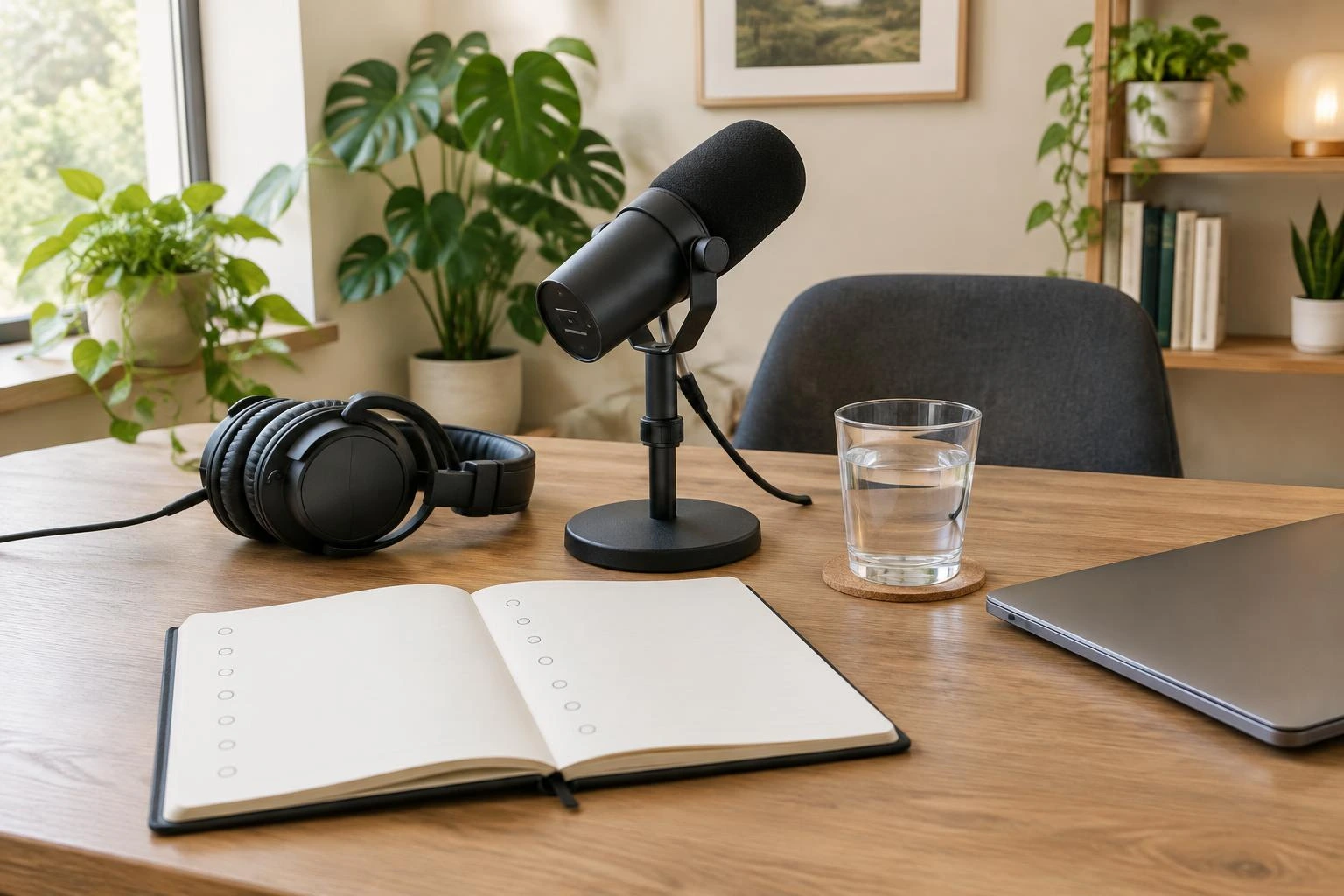
For a remote interview, test the microphone, headphones, connection, and camera if video is involved. Confirm the recording location and reduce interruptions. Have water and concise notes nearby. Check the joining instructions before the scheduled conversation.
Equipment checks remove avoidable distractions. They do not replace knowing your subject.
After the interview, review the actual response. Where did the host need clarification? What did you promise to send? What would you explain differently next time? Those questions connect preparation to building credibility, rather than treating recording day as the finish line.
You can explore my talks and interviews to hear the subjects behind this series. If you want the shorter version, the speaking FAQs bring the practical principles together.
Prepare enough to listen. Then let the conversation happen.
Continue the Speaking Series
For talks, recordings and event inquiries, visit my speaking page.
Build Confidence Through Practice, Not Performance
My confidence guide and reading path connects skills, decisions, reactions and communication. Use it for the overview, then return here for this specific practice.
“Prepare enough to listen. Then let the conversation happen.”
Sit with this
- What does this audience need that my notes do not yet address?
- Which example can I support and share responsibly?
- Where am I preparing to impress rather than explain?
Frequently asked
Keep reading