Speed Is Easy. Control Is Hard
August 5, 20252 min read535 words
Speed is easy. Control is hard
The takeaways
- 01
Operating at the edge of control in racing, business, and life is where true growth and skill development occur.
What to do nextPause for five minutes today, then name the one place in your week where control is playing out and you have been avoiding naming it.
- 02
Staying calm, deliberate, and in control while taking calculated risks helps you improve and avoid recklessness or excessive caution.
What to do nextHave one direct conversation about control with the person on your team who most needs to hear it.
- 03
Earning an SCCA competition license signifies a foundational step towards advanced open-wheel racing and personal mastery.
What to do nextBlock 30 minutes this week to audit how earning is showing up on your team, then decide one thing to change.
- 04
Disciplined practice and heightened awareness in high-stakes environments lead to sharpened precision and better performance.
What to do nextHave one direct conversation about awareness with the person on your team who most needs to hear it.
- 05
The pursuit of speed combined with control fosters personal growth and the ability to operate effectively within inherent risks.
What to do nextPick one meeting on this week's calendar where control is actually the underlying issue, and put that on the agenda by name.
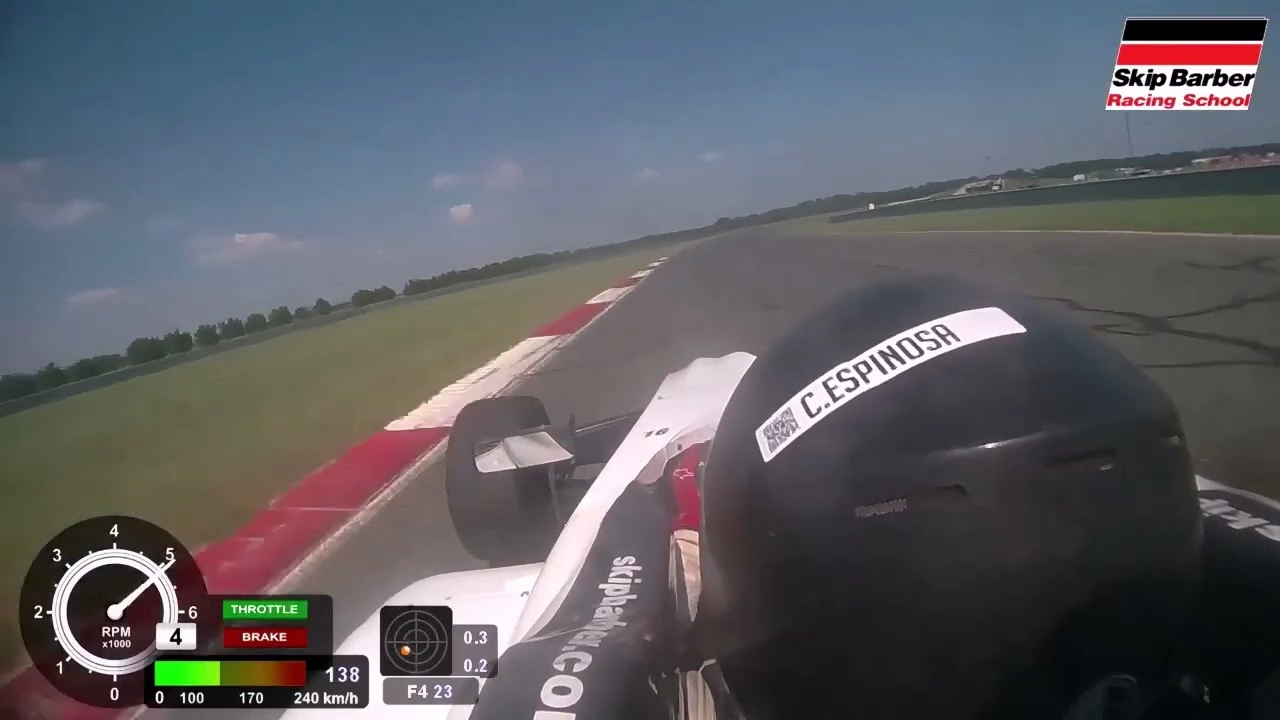
I wrapped up my 3-day Formula 4 experience with Skip Barber at New Jersey Motorsports Park at the end of July. Three days of brutal heat, humidity, and total focus.
My top speed on this lap was around 185 kph. It's not about the number. It's about how long I can stay near it through the straights and the turns without losing control.
That's where growth happens, right on the edge.
Too cautious, and you never find your limit.
Too reckless, and you blow past it.
Why Speed Is The Easy Part
Anyone can stab the throttle. The car will go fast in a straight line if you let it. Speed is a binary; either you commit to the pedal or you don't.
Control is everything that has to be true around the speed for it not to kill you.
Tire temperature. Brake bias. Where your eyes are looking three corners ahead. The smoothness of your hands at turn-in. Whether you trail-brake into the apex or release before it. How much throttle you can pick up without unsettling the rear.
None of that shows up on the speedometer. All of it is what separates a fast lap from a wrecked car.
The Same Pattern In A Company
Every founder I know hits a stretch where growth feels like throttle. More leads, more hires, more revenue, more press. The number goes up and it feels like winning.
Then something snaps. A delivery slips. A senior person quits. A client churns loudly. A quality issue surfaces. The speed was real, but the control under it was thin, and the first hard corner exposed it.
The companies that scale cleanly are not the ones with the most aggressive throttle. They are the ones whose control system; hiring bar, onboarding, internal documentation, decision rights, financial visibility; grew at the same rate as the top line.
At Blue Goat we have had to learn this the same way. When we cross a hiring threshold, the next quarter is almost always about tightening process, not pushing volume. Not because growth is bad. Because growth without control is a single missed apex away from a real wreck.
What "Operating Inside Risk" Actually Means
You can't eliminate risk. You just get better at operating inside it; calm, deliberate, and in control.
That phrase does real work. Operating inside risk means you have already accepted that the bad outcome is possible, and you have engineered the conditions around the decision so that the bad outcome is survivable.
On the track that is the run-off area, the harness, the helmet, and the corner worker. In a company it is the cash reserve, the second supplier, the documented decision log, the deputy who can run the meeting if you cannot.
The point is not to drive slower. The point is to drive at the actual limit knowing the system around you can absorb a mistake.
This was the first step toward earning my SCCA competition license, the credential that opens the door to real open-wheel racing.
But for me, it's more than that. It's another way to sharpen discipline, awareness, and precision when it matters most.
“You can't eliminate risk. You just get better at operating inside it.”
Frequently asked
Keep reading
-
Wet Tires at COTA: When the Conditions Change
Earlier session, same school, same principle. The driver who adapts the inputs survives the corner.
Read essay → -
No Wasted Years. No Wasted Cycles.
The business version of "you don't earn speed by panicking late." Fundamentals early or fire drills later.
Read essay → -
Founder-CEO vs Hired CEO: The Difference Is Personal
Who owns the control system as the company grows; and what changes when they don't.
Read essay →