The Accident That Taught Me to Live in the In-Between
May 9, 20265 min read1,068 words
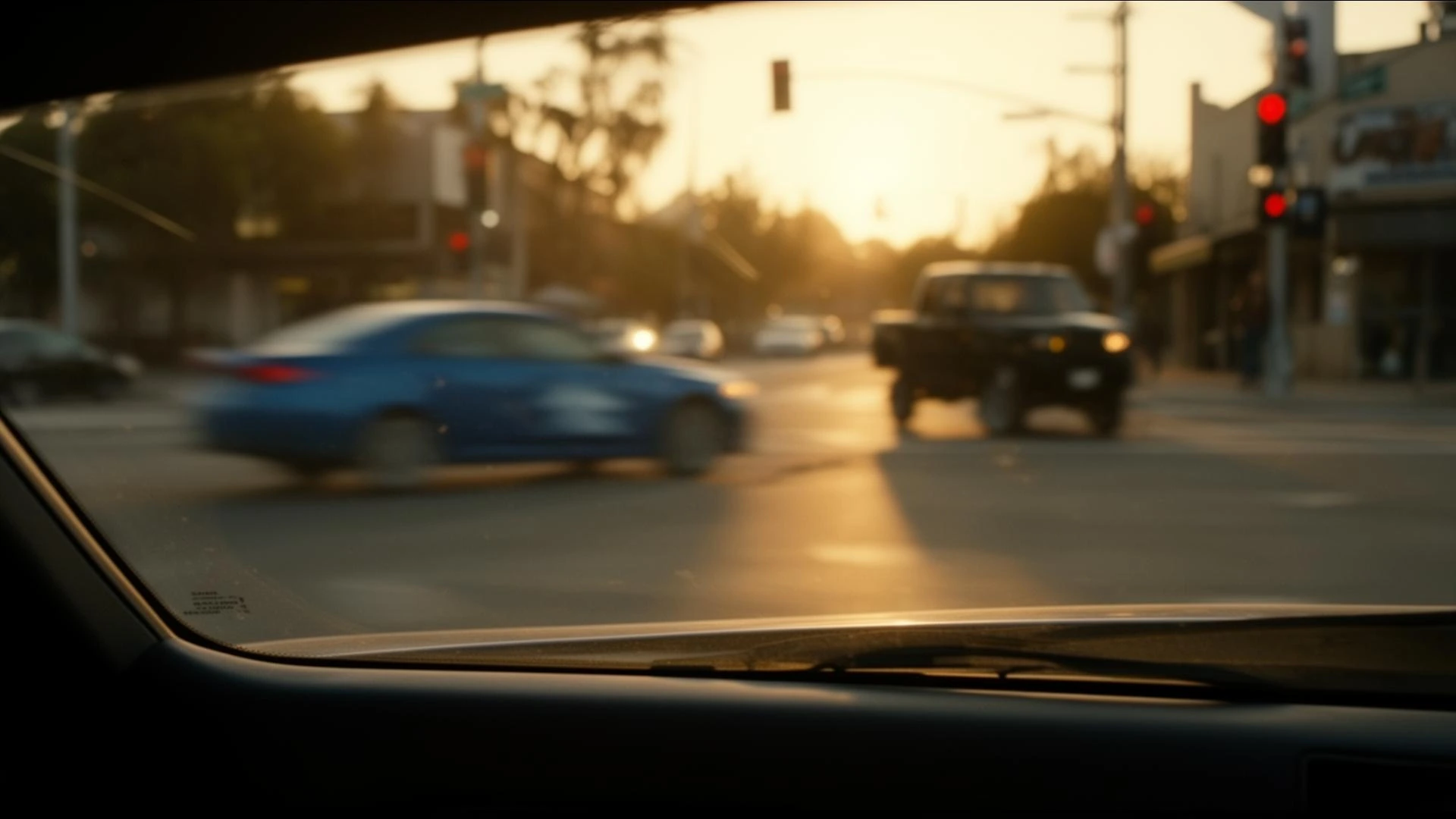
On May 9, 2022, I watched a blue car run a red light and T-bone a black truck in front of me. For about three minutes, all the noise in my head went silent. What was left in that silence is the thing I have been chasing ever since
The takeaways
- 01
An unexpected car accident can force a sudden, unbidden awareness of the present moment, silencing everyday worries and concerns.
- 02
During crisis, focus shifts entirely to immediate safety and well-being of those involved, demonstrating an innate human response to live in the present.
- 03
The feeling of "presence" experienced in high-stress situations often fades as routine anxieties quickly resurface after the immediate danger passes.
- 04
A relentless pursuit of future achievements, often seen as a highlight reel, can prevent one from appreciating the present and lead to personal disconnection.
- 05
The 'in-between' is the practice of valuing present micro-moments as primary, with larger life goals becoming secondary byproducts of this present-focused approach.
The day everything tried to warn me
This is the prologue of my book The In-Between: Life in the Micro, retold in my own voice here. Every detail below is drawn from that prologue.
Melissa and I had just flown into St. Louis from a Nightwish show in Boston. We were on the drive home. On I-70 in Missouri, a semi blew a tire next to our window. Then buckets of spill-cleanup chemicals fell off a truck and bounced across the highway in front of us like an obstacle course. Then the restaurant we pulled into was unexpectedly closed.
The universe was clearing its throat.
We crossed the Mississippi, where I-70 becomes I-64 in Illinois, and when we left the restaurant and rolled up to the intersection near our house, the blue car ran the red light. The T-bone happened ten feet from our front bumper. The truck bounced backward toward us. I checked the rearview, threw the van in reverse, and we got hit anyway. It was less than we would have been hit.
The woman in the blue car staggered out. She had a broken arm, a bleeding leg, glass falling off her, one shoe. Melissa, who is a nurse, caught her in the intersection before she fainted. I checked on the guy in the truck. A stranger pulled up behind us and asked how she could help. I told her to call 911. The injured woman kept repeating, "call my husband, call my husband." I called him.
For those three minutes, none of the things I normally think about existed.
The line I wrote in the prologue was this: Sometimes I'm so focused on the macro-goal that I lose sight of what others need in the micro-moments, which I believe is to feel understood, appreciated, and not alone, particularly when in crisis. That sentence is the whole reason the book exists.
(A note for readers of the book: I called her Vanessa in The In-Between*. She's Melissa, now my wife. Same person, same instincts.)*
What was, and wasn't, on my mind
While we were helping, here is what wasn't in my head: the book I was writing, the meetings the next morning, whether Melissa was going to be late, the family function she had to get to, the deal I was negotiating, the next mountain I was supposed to climb.
Here is what was: is the guy in the truck okay, is the woman in the blue car okay, is the scene safe, what more can I do.
I did not have to work at being present. There was no presence meditation, no breath count, no journal prompt. The micro-moment took over because the macro-moments could not compete. And when the EMTs finally rolled the woman away on the stretcher and she reached for Melissa's hand to say thank you, I cried behind my sunglasses.
Then everything came back into focus. Not the cars. The thoughts. The to-do list. The finances. The fitness. The macro reasserted itself with the force of a habit a lifetime in the making.
The pattern I had been running for 40 years
If you have followed any of my story, you know the shape of it: Air Force, dot-com, Alpine Security, the sale, the climb up two of the seven summits, the skydives, the Ironman, Blue Goat Cyber, the books, the speaking. From the outside it looks like a highlight reel. From the inside, for most of it, it was a man who could not sit still because sitting still felt like losing.
I was always pointed at the next summit. The minute I reached one, the joy lasted about an hour and then I was scanning the horizon for the next one. The drive that built the businesses was the same drive that walked me past every person in front of me on the way to the next thing. Including, eventually, the people I loved.
I hit my real rock bottom in Denmark, on a trip I was supposed to be enjoying, snapping at a hotel clerk because the macro could not be tamed. I came home and started writing what would become The In-Between. The accident, months later, was the universe underlining the lesson with red ink; that is why the prologue opens with the intersection instead of the manuscript.
What "in-between" actually means
The macro is the destination; the title, the exit, the summit, the certification, the followers. The micro is the conversation in front of you right now. The in-between is the discipline of treating the micro as the real thing and the macro as the byproduct. In the book I put it this way: The in-between is where life actually happens. The macro moments are the punctuation. The micro is the sentence.
I used to believe the macro was the prize and the micro was the tax I paid to get there. That belief built a successful career and a hollow life. The reversal is not soft. It is not woo. It is a deliberate, daily practice of choosing the person in the intersection over the family function, the meeting in front of you over the inbox behind it, the partner in the room over the next mountain on the map.
When I do it, I am happier and I get more done. When I do not, I produce a lot and feel nothing.
What I would tell my younger self
The achievements will come. The companies will sell. The summits will get summited. None of it will be enough on its own; that is the trick the macro plays on you. The euphoria you are chasing is hiding in the micro the whole time, in the three-minute window when you are useful to a stranger in an intersection and your own story shuts up long enough for you to notice.
You do not need a car crash to find that window. You need to decide, on purpose, that the person in front of you right now is the entire game.
That is the in-between. That is where life actually is.
Sit with this
- Name the macro-goal you are chasing right now. If you reached it tomorrow, what would still be hollow?
- When was the last micro-moment that pulled you fully into the present? What made it strong enough to do that?
- Who is in front of you today that you have been treating as a tax on the way to something else?
- What would change about the next conversation you walk into if the macro went quiet for three minutes?
Frequently asked
Keep reading
-
How to Be Good at Being Present - Christian Espinosa
The practice I built after the accident.
Read essay → -
Micro-Moments Center on the Present - Christian Espinosa
The framing that came out of that day.
Read essay → -
Chase Your Dreams by Living in the In-Between - Christian Espinosa
Where the in-between became a way of living.
Read essay →